If your online store woke up to a rankings drop on or after June 24, 2026, you are not alone and you are not imagining it. Google rolled out its second spam update of the year between June 24 and June 26, 2026, and ecommerce websites were among the hardest hit categories globally.
The update completed in just two days and one hour. It applied globally across every language and every region, including the UAE, and it targeted violations of Google’s existing spam policies through SpamBrain, Google’s AI-powered spam detection system. Unlike a broad core update that reshuffles rankings based on content quality, this was a targeted enforcement action. Sites that crossed the line got hit. Sites that did not, largely saw nothing change.
The question every ecommerce business owner in Dubai and across the UAE is asking right now is the same: did this update hit me, why did it happen, and what do I do to get my rankings back?
This guide answers all three. At Future Host, we track every Google update and its impact on UAE business websites. Here is everything you need to know about the June 2026 spam update and the exact steps to take right now if your ecommerce store was affected.

What Exactly Is the Google June 2026 Spam Update?
Before diving into recovery, it is important to understand what kind of update this was, because the type of update determines the correct response. Confusing a spam update with a core update and responding to the wrong one wastes months of recovery time.
Google runs two fundamentally different types of algorithm updates:
- Core updates are broad quality reassessments. They reshuffle rankings based on how well content serves users, with no specific site being targeted for a policy violation. Recovery from a core update means improving content quality and authority over time.
- Spam updates are enforcement actions. SpamBrain, Google’s AI-based spam prevention system, identifies sites violating specific spam policies and demotes or removes them. Recovery means identifying the policy violation, fixing it, and waiting for Google’s systems to reassess.
The June 2026 spam update was the second spam update of 2026, following the March 2026 spam update which made history as the fastest spam rollout ever completed, finishing in under 20 hours. This June update took two days and one hour from launch to completion, starting at 9:00 AM Pacific on June 24 and finishing on June 26.
Google described it as a normal spam update with no new spam policy categories introduced alongside it. Barry Schwartz confirmed directly with Google that this update does not target link spam or the Site Reputation Abuse policy. This matters enormously for diagnosis. If your rankings dropped in June 2026, your backlink profile is almost certainly not the cause.
Important context: The May 2026 core update only finished rolling out on June 2, meaning many UAE ecommerce businesses were already experiencing ranking volatility before the June spam update even began. If your traffic dropped before June 24, the May core update is the more likely cause and requires a completely different response. Our SEO team can help you diagnose which update caused your specific ranking changes.
Why Were Ecommerce Sites Hit Harder Than Other Website Types?
This is the most important question for any Dubai or UAE online store owner to understand. Ecommerce websites are uniquely vulnerable to spam updates for structural reasons that have nothing to do with intent. The same features that make ecommerce sites large and scalable are exactly what Google’s spam detection systems scan for risk patterns.
The ecommerce scale problem:
A typical ecommerce store generates hundreds or thousands of pages automatically: product pages, category pages, filtered URL variations, comparison pages, brand pages, location pages and blog content. This scale creates enormous opportunity for organic traffic but it also creates enormous risk when page quality is inconsistent.
Google’s SpamBrain does not evaluate pages individually in isolation. It looks for patterns across your entire site. When it finds hundreds of product pages sharing the same template, the same generic description structure, the same internal link pattern and minimal original content, it reads that as a detectable spam signal, even if no individual page was created with malicious intent.
The specific patterns that triggered the June 2026 update on ecommerce sites:
- Thin product pages: Product pages with almost no unique information beyond a product name, price and manufacturer description. A product page should help a customer decide whether that specific item is right for them. If it does not, it is functionally thin content regardless of its word count.
- Category pages with no buying guidance: Category pages that simply list products with no helpful introduction, no comparison guidance, no filtering explanation and no original value for the shopper. A category page should help customers compare and choose. Bare product grids with no copy fail this test.
- Duplicate or near-duplicate descriptions: Copying manufacturer descriptions across multiple products or using the same template text with only the product name changed. Google’s systems identify this pattern reliably and treat it as scaled low-value content.
- Auto-generated pages at scale: Programmatically created pages combining variables such as colour and size or brand and location that produce hundreds of near-identical pages targeting long-tail queries with minimal differentiation between them.
- AI-generated content without human editorial review: Content produced by AI tools without fact-checking, original insights or human oversight. Google does not penalise AI-generated content because AI was used. It penalises AI content that provides no original value and was clearly produced purely for ranking purposes at scale.
- Doorway pages: Pages built specifically to rank for a search query and funnel users toward another destination without providing standalone value. In ecommerce, this often appears as thin landing pages targeting specific product search terms that redirect or immediately push users to a category page.
- Cloaking: Showing Google’s crawlers different content than what real users see. This has been a spam policy violation for years and remains one of the clearest triggers for spam enforcement.
Key clarification from Google: AI-generated content is not automatically spam. The violation is producing large volumes of AI-generated content without meaningful human review, original insights or genuine value for users. A well-edited, expert-reviewed article that used AI as a writing tool is not the target. A site publishing 500 AI-written product comparisons with no editorial oversight very much is.
The New AI Manipulation Spam Policy: What UAE Ecommerce Businesses Must Know
One of the most significant and underreported developments connected to the June 2026 spam update is a policy change that happened on May 15, 2026, just weeks before the update launched. Google updated its spam policies to explicitly state for the first time that spam includes attempting to manipulate generative AI responses in Google Search.
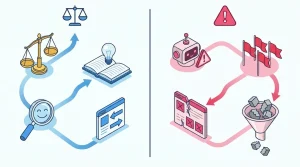
This is a landmark policy change. Google’s AI Overviews and AI Mode now operate under the same spam policies as traditional blue-link search results. Businesses or SEO tactics that were attempting to engineer AI citations through manufactured mentions, fake authority signals or content structured purely to game AI summaries are now explicitly in violation of Google’s spam policies.
For UAE ecommerce businesses this means two things. First, any tactic you or your SEO agency was using specifically to appear in AI Overviews through shortcuts rather than genuine authority is now a policy risk. Second, and more positively, the same work that keeps your site spam-compliant for traditional search also protects your visibility in AI search. There is no separate AI SEO strategy. There is only building a genuinely trustworthy, high-quality site that Google’s systems recognise as reliable.
Step 1: Confirm Whether the June 2026 Update Actually Hit Your Site
Before changing a single page on your website, you need to confirm that the June 2026 spam update is actually responsible for your ranking changes. Making changes based on the wrong diagnosis wastes months of recovery time and can introduce new problems on top of the existing ones.
How to check in Google Search Console:
- Open Google Search Console and go to Performance, then Search Results.
- Set your date comparison to compare the period after June 26 against the equivalent period before June 24. This gives you a clean pre-update versus post-update comparison without the rollout noise in between.
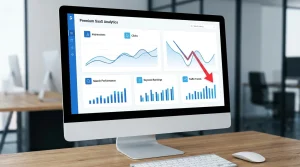
- Look for a clear, sustained step-down in clicks and impressions that begins on or after June 24. A drop that predates June 24 points to the May 2026 core update, not the spam update.
- Filter by Page to see which specific URLs lost visibility. Group them by page type: product pages, category pages, blog posts, landing pages. If the drop is concentrated in one page type, you have found your pattern.
- Filter by Country to check whether the drop is global or concentrated in a specific market. The June 2026 update was global, so a drop limited to one country may point to a different cause.
- Check Manual Actions under Security and Manual Actions. Spam updates are algorithmic, not manual. If you have a manual action showing, that is a separate issue requiring a different response process.
If your drop is concentrated in templated page types like product pages or category pages, starts on or after June 24, and shows no manual action in Search Console, the June 2026 spam update is the most likely cause.
Step 2: Identify Your Specific Spam Pattern
Spam updates are not one-size-fits-all. The recovery path for thin product pages is completely different from the recovery path for auto-generated doorway pages. Identifying your specific pattern before making changes is not optional. It is the difference between a focused, effective recovery and months of frantic changes that fix nothing.
Ask yourself these diagnostic questions:
- Do my product pages contain any original content beyond the manufacturer description, or are they effectively a copy-paste from the supplier with a price added?
- Do my category pages have helpful introductory content that guides shoppers, or are they bare product grids with no original copy?
- Have I used AI tools to generate content at scale without meaningful human editorial review of each piece?
- Do I have multiple pages targeting almost identical search queries with minimal differentiation between them?
- Do I have any pages whose primary purpose is to rank for a keyword rather than genuinely serve a user need?
- Are there pages on my site where what Google sees during crawling differs from what a real user sees?
If you answered yes to two or more of these questions, you have identified your spam pattern and you have a clear starting point for recovery.
Step 3: The Recovery Roadmap for UAE Ecommerce Businesses
Recovery from an algorithmic spam update is measured in months, not days or weeks. Google is clear in its documentation that its systems may take months to reassess a site after improvements have been made. There is no reconsideration request process for algorithmic spam demotions. You make genuine changes. Google’s systems recrawl your site and confirm compliance over time. Visibility returns gradually as that reassessment happens.
The goal is not to find a shortcut. The goal is to remove every reason Google’s systems might reasonably view your site as low-trust or low-value, and to do it thoroughly enough that the next spam update passes without impacting you at all.
The recovery priority list for ecommerce sites:
- Audit all page types separately: Export Search Console data segmented by page type. Product pages, category pages, blog posts and landing pages should be reviewed separately because the issues affecting each type are different.
- Identify your thinnest pages first: List every product or category page with minimal unique content. These are your highest-risk pages and the most likely trigger for your spam signal.
- Improve, consolidate or remove: For thin product pages, add original descriptions, use case information, specifications, compatibility details and real customer context. For duplicate or near-duplicate pages, consolidate multiple weak pages into one strong one rather than trying to improve each one individually. For pages with no realistic path to providing genuine value, consider removing them and redirecting to a stronger related page.
- Rewrite category pages with genuine buying guidance: Every category page should open with a helpful introduction that explains what the category contains, how to choose between products in it and what a buyer should consider. This is not a word count exercise. It is a genuine value exercise.
- Remove or humanise mass AI-generated content: Any content produced at scale by AI tools without human editorial review should either be substantially rewritten with original insights or removed. Do not simply add a few sentences to AI-generated pages and assume the problem is resolved. Google’s systems look at content patterns across your entire site, not individual pages in isolation.
- Fix your internal linking structure: Spam-associated internal link patterns, such as sitewide keyword-stuffed link blocks, excessive footer links to specific pages and unnatural anchor text repetition, can reinforce a spam signal. Use varied, natural anchor text and ensure your internal linking structure serves navigation rather than appearing as a ranking manipulation tactic.
- Control what Google indexes: Use noindex directives for pages that provide no independent value. Filtered URL variations, duplicate parameter pages and low-quality auto-generated pages should not be consuming Google’s crawl budget on your site.
- Strengthen trust signals site-wide: Add clear contact information, visible business details, comprehensive shipping and returns policies, real customer reviews and transparent pricing. For UAE ecommerce stores specifically, displaying your DED trade license number and VAT registration adds significant trust credibility.
What the June 2026 Spam Update Means for Your Long-Term SEO Strategy
The June 2026 spam update, like every Google spam update before it, is not a reason to panic. It is a calibration of Google’s enforcement systems based on the same policies that have existed for years. If your site was not hit, it is because your content and technical SEO practices were already aligned with what Google’s systems expect.
If your site was hit, the update revealed a structural vulnerability that would have caught up with you eventually regardless. The businesses that recover fastest are the ones that treat this as an opportunity to build the kind of site that passes every future update, not just the current one.
The June 2026 update also reinforces a trend that has been accelerating since 2024. AI tools have made it trivially easy for anyone to publish hundreds of pages of content at scale. Publishing at scale and publishing genuine value at scale are not the same thing. Google’s spam systems are now sophisticated enough to reliably tell the difference, and they will only get better at doing so with every subsequent update.
For UAE ecommerce businesses, this means the sustainable SEO strategy in 2026 and beyond is built on fewer, stronger pages with genuine original content, not thousands of thin pages trying to cover every possible keyword variation. Quality over quantity is not a cliche in 2026. It is the only strategy Google’s systems consistently reward.
We covered the March 2026 spam update in detail in our earlier article on Google’s March 2026 updates. If you missed it, reading both articles together gives you the full picture of how Google’s spam enforcement has evolved throughout 2026 and what it means for your site going forward.
Did Your UAE Online Store Lose Rankings After June 24? Future Host Can Help.
Diagnosing a spam update impact correctly is the most important first step in recovery. Fixing the wrong issue wastes months and can introduce new ranking problems while the real violation remains unaddressed.
At Future Host, our SEO team conducts full Google update recovery audits for ecommerce businesses across Dubai, Abu Dhabi and Sharjah. We analyse your Google Search Console data, identify the specific page types and content patterns that triggered your ranking loss, and build a clear, prioritised recovery plan that addresses the real problem rather than guessing at it.
We also build and manage ecommerce websites on Shopify and WooCommerce with SEO-compliant page structures, original product content and technical configurations that are built to pass Google’s spam policies from day one, protecting your rankings through future updates rather than reacting to them after the damage is done.
If your store lost rankings after June 24, 2026, get in touch with our team today for a free recovery audit. The sooner you identify the real cause, the sooner Google’s systems can begin reassessing your site.
Lost Rankings After the Google June 2026 Spam Update?
Future Host provides complete Google spam update recovery audits for UAE ecommerce businesses. We identify exactly what triggered your ranking drop and build a clear recovery plan so you stop guessing and start fixing the right things.
- Full Google Search Console data analysis
- Page-type segmentation and spam pattern identification
- Ecommerce product and category page content audit
- Technical SEO and indexing review
- Prioritised recovery roadmap with clear timelines
- Ongoing SEO management to protect future rankings